




Polymer prices - october price increases partly successful, with minor corrections expected in the week ahead
Converters are mostly just replenishing inventories rather than buying ahead, and end-user demand also appears not to have picked up as expected. Some polymer producers have started to adopt more flexible pricing and encourage converters to buy by offering small discounts. Converters are behaving much as they have in previous years: the end of the year is approaching, and they no longer want to build inventories. Most expect prices to fall toward year-end and may only consider buying ahead then. However, the continued rise in feedstock prices points to further increases in olefin monomer prices, and possibly styrene monomer prices, in November.
Based on preliminary expectations and current feedstock prices, olefin monomer prices are expected to increase by €50-70. However, it is unclear whether polyolefin price increases are achievable, as demand was already weak last week and purchasing momentum could only be sustained through discounts. Although polymer producers are confident that price increases will be accepted, both distributors and converters remain skeptical. This is particularly true given that several European polyolefin producers implemented small price cuts last week. Year-end inventory levels are important to polymer producers, and integrated producers are expected to avoid taking risks and offer competitive prices as early as the beginning of November. However, polyolefin producers that depend on external monomer supplies have no choice but to insist on price increases. In addition, delayed imported polyethylene and polypropylene shipments ordered for October are expected to arrive by November at the latest, at prices below current levels. However, current prices in the Far East and North America are already higher than European prices, so we do not expect further significant import shipments to arrive toward year-end. This could reduce supply pressure in the European market at the end of the year.
There are more uncertainties surrounding styrene monomer, however. Rising feedstock prices should push prices higher. However, the substantial, unexpectedly large increase in SM prices in October (+€279 per metric ton) caused polystyrene demand to fall dramatically. There are concerns that another price increase could bring both polystyrene demand and production in Europe to a complete halt. This is particularly relevant as the season for EPS, the segment with the strongest demand, is gradually coming to an end. One argument against a styrene monomer price increase is that the price of benzene, the raw material with the greatest influence on SM prices, rose by only €261 in October, which should have resulted in an SM price increase of roughly €130-140. The larger part of the increase was due to rising prices for other feedstocks and supply uncertainty, as 30% of European SM imports come from the Middle East. Increasing volumes of North American shipments are replacing the missing imports. Nevertheless, feedstock price pressure and supply uncertainty are expected to persist in November, but this risk will not be priced in a second time. As a result, the scale of any SM price increase will depend primarily on changes in benzene prices. Although European benzene supply is tight, high prices are encouraging imports from both North America and even India. This is bringing some price relief, although it is unlikely to last. Consequently, while an SM price correction or decline cannot be ruled out, a modest, double-digit price increase is the most likely outcome in November.
Lieferanten zu diesem Thema
-
SRNOPLAST K96 s.r.o.
Ankauf und Zerkleinerung von Kunststoffmaterialien, Lohnzerkleinerung von Kunststoffen, Regranulat, Regranulierung… -

Archeo CZ s.r.o.
Distributor führender Herstellermarken technischer Granulate, einschließlich PA und POM, fachkundige Beratung bei der… -
SOLLAU CZ s. r. o.
Ankauf und Verkauf von Kunststoffmahlgut und Regranulaten, Magnete und Magnetabscheider, Metallabscheider, Rezyklat… -

geba Kunststoffcompounds GmbH
Masterbatches für Kunststoffe, Kunststoffregranulat, ABS-Regranulat, Kunststoffregranulat aus ABS, PC, PC/ABS, PA6… -
Szeplast Zrt.
Entwicklung und Herstellung von Weich- und Hart-PVC-Granulaten, Prüfung von Kunststoffgranulaten, Laborprüfungen. -

Remarkplast compounding a.s.
Kunststoffcompounds, Compoundieren von Kunststoffen, Regranulat, Regranulierung von Kunststoffen…




-

Genesis Polymers Europe und Velogy bringen die europäische PP- und PE-Produktion auf der Messe (Fachmesse) Fakuma 2026 näher an die Kunden
Der gemeinsame Auftritt auf der Messe (Fachmesse) Fakuma (Halle B2, Messestand (Stand) 2310) präsentiert eine wachsende europäische Polyolefin-Plattform, die... -
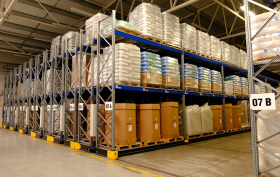
VACULA s.r.o.: Zuverlässige Lieferungen von Kunststoffgranulaten auch in unsicheren Zeiten
In der derzeit schwierigen Lage auf dem globalen Markt, die unter anderem von geopolitischen Spannungen geprägt ist, sehen sich viele Unternehmen mit... -
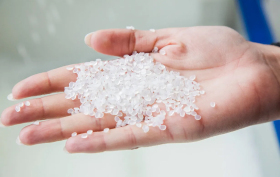
LIFOCOLOR empfiehlt: So wählen Sie die passende Granulatgröße für die Produktion
Haben Sie Probleme mit Farbtonschwankungen, Materialentmischung im Einfülltrichter oder ungenauer Dosierung? Eine der Ursachen kann eine falsch gewählte...